Savage 340 Serial Number Dates
Date apprehended February 24, 1994; 23 years ago ( 1994-02-24) Frederick Walter Stephen West (29 September 1941 – 1 January 1995) was an who committed at least 12 murders between 1967 and 1987 in, the majority with his second wife,. All the victims were young women. At least eight of the murders involved the Wests' sexual gratification and included,, and; the victims' bodies were typically buried in the cellar or garden of the Wests' Cromwell Street home in, which became known as 'the House of Horrors'.
In addition, Fred is known to have committed at least two murders on his own, while Rose is known to have murdered Fred's stepdaughter, Charmaine. The pair were apprehended and charged in 1994. Fred West while on at on 1 January 1995, at which time he and Rose were jointly charged with nine murders, and he with three additional murders. In November 1995, Rose was convicted of ten murders and sentenced to ten with a. Moorcourt Farm,, where West lived, in Moorcourt Cottage, 1946–1961 In 1946, the family moved to Moorcourt Cottage at Moorcourt Farm, where Fred's father worked as a and harvest hand. The cottage had no electricity and the sole source of heat came from a log fireplace.
By 1951, Fred's mother had given birth to eight children, six of whom survived, but Fred was always his mother's favourite. He was seen as a, and relied mostly on his siblings for companionship.
The West children were expected to perform assigned chores, and all six did seasonal work: the three girls picking hops and strawberries, the three boys harvesting wheat and hunting rabbits. The necessity of working to earn a living, or even just to survive, instilled a strong work ethic in Fred, who nonetheless also developed a lifelong habit of petty theft. Classmates recall Fred as scruffy, dim, lethargic, and regularly in trouble. Throughout his life, he remained scarcely, but with an aptitude for woodwork and artwork. He left school in December 1956 at age 15, initially working as an unskilled labourer at Moorcourt Farm. Fred claimed he was introduced to sex by his mother at 12, to have engaged in acts of with animals in his early teens, and that his belief in being normal stemmed from his father's incest with Fred's sisters.
(Fred's youngest brother, Doug, dismissed these claims as nothing but fantasy on Fred's part.) Adolescence [ ] By 1957, Fred and his brother John would socialise at a youth club in nearby, though his distinct and marked him as a 'country bumpkin'. He aggressively pestered women and girls, whom he as sources of pleasure to be used as he saw fit, and would abruptly approach and fondle them. When a girl did acquiesce to his advances, she would find his sexual performance unsatisfying, as his primary objective was his own gratification. Shortly after his 17th birthday, Fred purchased a motorcycle, and two months later suffered a, a broken arm, and a broken leg in an accident. He was unconscious for seven days and walked with for several months; because of this incident, Fred developed an extreme fear of hospitals and became prone to fits of rage.
EXTREMELY EARLY PRODUCTION 1908.25 AUTO PISTOL, SERIAL NUMBER 41XX, MADE 1909, considering that over 409,000 of these.
Two years later, he suffered another head injury when a girl he groped on a fire escape outside the Ledbury Youth Club punched him, sending him falling two floors. In June 1961, Fred's 13-year-old sister, Kitty, told her mother that Fred had been having sex with her since the previous December, and had impregnated her. Arrested the same month, Fred freely admitted to police he had been molesting young girls since his early teens and asked, 'Doesn't everybody do it?'
He was tried on 9 November. Though disgusted by her son's actions, Daisy had been prepared to testify in his defence. Kitty refused to testify and the case collapsed. Much of Fred's family effectively him, his mother banished him from the household, and he moved into the Much Marcle house of his aunt Violet.
However, by mid-1962 he had reconciled with his parents, although his relationship with most of his family remained fraught. Rena Costello [ ] Marriage [ ] Fred became re-acquainted with Catherine ('Rena') Bernadette Costello in September 1962, when he was 21 years old. He had first met Costello—who hailed from, —at a Much Marcle dance hall in 1960, and dated her for several months before she returned to Scotland. By now, Costello was pregnant by a bus driver, and she may have relocated from to England due to the stigma of her baby's mixed ancestry.
She married Fred in Ledbury on 17 November, the sole guest being Fred's younger brother John. The couple initially lived in Fred's aunt's home, but relocated to Coatbridge, where Fred worked as an ice cream van driver. Rena's daughter, Charmaine, was born in March 1963; to explain the child's mixed ancestry, Rena and Fred claimed that she had suffered a and that Charmaine was adopted. Shortly thereafter, the couple relocated to Savoy Street, in the district of.
In July 1964, Rena bore Fred a daughter, Anna Marie. The child was born at the couple's Savoy Street home.
Both the family nanny, Isa McNeill, and neighbours of the Wests recall Rena as a considerate mother 'struggling to bring up two children', although Fred treated the children harshly. He kept the girls in the bottom of a with bars fitted to the space between the bunks, caging them in; they were allowed out only when he was at work.
Shortly thereafter, the Wests became acquainted with 16-year-old Anne McFall, a friend of McNeill's, who was despondent over the death of her boyfriend in a workplace accident. McFall spent a great deal of time at the Wests' flat. The West family, pictured in the basement of their Cromwell Street home on the date of Anna Marie West's January 1984 marriage. Heather, aged 13 is depicted at the extreme right Both Heather and Mae West became the focus of Fred's incestuous sexual attentions after Anna Marie ran away from home at age 15 in 1979 after enduring a particularly severe beating from Rose to her stomach just days after being discharged from hospital for treatment of an. The frequency of the abuse endured by Heather and Mae increased when both girls hit.
Fred was both overt and unapologetic in his conduct, and would justify his actions with the simple explanation: 'I made you; I can do what I like with you.' He would further refer to his intentions to impregnate both his daughters on at least one occasion, and would occasionally force all his children to watch pornography with him. As Heather, Mae and their younger brother Stephen were very close in age, the trio resolved that if their father asked either of the two girls to be alone in a room with him, they would only do so if at least one other member of the trio were present to avoid either girl being raped. In addition, both girls developed a regime whereby they would only shower or undress when their father was either out of the house, or as her sister stood guard at the door. Stephen himself was also informed by his father he would have to have sex with his mother by the age of 17 (although his parents would evict him from their home at age 16). Although both girls were repulsed by their father's antics, Mae—having once endured Fred's throwing a vacuum cleaner at her when she remonstrated against his fondling her—would develop a whereby she would succinctly tolerate Fred's sexually fondling her before jokingly brushing aside any efforts he made to take the molestation further, whereas in her autobiography, Mae recollected that Heather, 'was affected quite badly by all of this. [Even] more than me.'
A strong suspicion remains that, by 1985 or 1986, Heather had been forced to engage in intercourse with her father, as by the mid-1980s, she is known to have developed classic symptoms of the distress felt by victims of child abuse: these included habits of her biting her nails until they bled; drinking alcohol; of warily watching her father through the corner of her eye wherever she was sitting or standing; expressing nervous fragility whenever in the presence of males; her sleep being repeatedly broken by nightmares; and her repeatedly bouncing back and forth as she sat on any chair. This distressful behaviour led to both Fred and Rose suspecting Heather held inclinations, and also resulted in the girl becoming the increasing recipient of taunts from her father (who had never particularly held a liking toward Heather) that she was 'ugly' and a 'bitch'. On the occasions Heather remonstrated about the abuse to her mother, Rose would simply laugh at her distress.
Heather is also known to have expressed to Mae and Stephen her desire to run away from home and live a lifestyle in the, and to never again see any human beings. Murder of Heather West [ ] Heather did complain to friends about the abuse she and her siblings endured, and her external signs of were noted by several of these individuals.
Staff at the Secondary School, which Heather and her siblings attended, are also known to have expressed concern as to why Heather—a studious and obedient pupil—refused to obey orders either to change her clothing for, or shower after, sporting activities. On one occasion, she was forced to take a shower, resulting in her peers and staff noting her arms, legs and torso were covered in welts and bruises in various stages of healing. Heather attempted to excuse these injuries as having been obtained in fights with her siblings, although she would confide in one close friend that the injuries had been inflicted by her parents, adding that her mother considered her a 'little bitch' who deserved her beatings.
By the mid-1980s, rumours of Rose's sex life had reached several of the children's classmates, and although the West children had been instructed never to divulge details of their home lives to their peers, Heather did confide to her friends that many of these rumours were true. The father of one of these classmates was a friend of the Wests; as such, word soon reached Fred and Rose that Heather had divulged details of her home life—including details of her mother's promiscuity—to her classmates.
Fred was so concerned by these revelations that he began to escort Heather to and from school. After Heather left school in the middle of 1987, she applied for numerous jobs in an effort to leave Cromwell Street. By June, she had pinned her hopes on escaping the household via obtaining a job as a cleaner at a holiday camp in the seaside town of, although she would receive notification this application had been unsuccessful on 18 June. In response, she crumpled into tears before her siblings Mae and Stephen. That same evening, her whole family heard Heather sobbing aloud as she attempted to sleep, and according to Mae, she 'cried all the way through the night.' The following morning, on 19 June, Heather was 'back to her usual self, looking miserable, biting her nails and sitting on the couch bouncing back and forth as she sat' as her siblings left the house to go to school. When Heather's siblings returned home, they were informed Heather had left to accept the job she had previously been refused in Torquay, although Rose told an enquiring neighbour that she and Heather had had a 'hell of a row', and that Heather had run away from home.
Later, to allay their children's concerns as to why Heather failed to contact or visit her siblings, the parents claimed that Heather had actually eloped with a lesbian lover. When Mae and Stephen suggested they report Heather's disappearance to police, Fred changed his story yet again, saying it would be unwise to initiate a search for Heather as she was involved in. Furthermore, on more than one occasion, Fred and Rose are known to have persuaded an unknown acquaintance to fabricate a phone call from Heather to her parents. I mean Heather, I mean I thought the bloody world of Heather. So anyway I got to grips with it after a while, and the first thing that [came] into my mind was I'm gonna have to take this. And sort it out, which I did, all the messes Rose got herself into, I took the fucking rap for them, and helped 'em out.
So anyway, I said. 'You'll have to tell me exactly what happened'. She said that Heather was cut up. Well, I never felt so ill for a few seconds, a few minutes before I could get to grips with myself again, and I said: 'What on Earth did you cut her up for?' She said, 'She wouldn't fit in the dustbin!'
Now, the thing that makes it hard, [is] that she cut Heather up and chucked her in a fucking dustbin. Her daughter, in a dustbin. —Fred West (1994) In the years following Heather's disappearance, Fred would occasionally jokingly threaten the children that they would 'end up under the patio like Heather' if they either misbehaved or divulged the mistreatment they endured to anyone outside the household. With Rose's approval, he would later construct a barbecue pit immediately opposite where Heather had been buried, and would deliberately place a pine table atop her grave for the children of the family to sit upon whenever the Wests held family gatherings in their garden.
Heather's disappearance, Fred and Rose's constantly changing stories as to their daughter's whereabouts, plus their repeated, mocking references to their other children that they would be buried beneath the patio like their sister if they misbehaved, would ultimately lead to police enquiries as to Heather's whereabouts. These enquiries would culminate in a being issued to excavate the Wests' garden in February 1994. Arrest [ ] In May 1992, Fred asked his 13-year-old daughter to bring some bottles to a room on the first floor of their home. Rose was not present in the home at the time. Shortly thereafter, the girl's siblings heard her scream, 'No, don't!'
Later, Fred returned downstairs. The girl was found by her siblings writhing in pain, sobbing that her father had raped and her, at one stage partially strangling her. When Rose returned home, the girl confided in her mother that she had been raped by Fred, although Rose simply replied, 'Oh well. You were asking for it.'
Over the following weeks, the girl was raped on three further occasions, with Rose personally witnessing one of these rapes before following her distressed and bleeding daughter into the bathroom and asking the child, 'Well, what did you expect?' Fred also filmed one of these rapes. Several weeks later, the girl garnered the courage to confide in a close friend what her father had done; this friend would divulge what had happened to her own mother on 4 August. In response, the friend's mother anonymously informed the police. On 6 August 1992, the police searched the West household on the pretext of searching for stolen property. Although numerous objects of sexual paraphernalia—including 99 pornographic videos of both home-made and commercial nature—were discovered, police did not find the video depicting the rape of Fred's daughter.
Nonetheless, the 13-year-old made a full statement through a specially-trained, describing her father's actions, the fact the sexual abuse had begun when she was 11, and that her mother had been casually indifferent to her plight. All the children in the household were placed in the following day.
Medical examinations revealed both physical and sexual abuse. (Journalist and author has also claimed the younger West children were 'afflicted with and.' ) The West children also divulged their mother had inflicted most of the physical abuse and that their father frequently said that if they told anyone about the goings-on in the household they would be 'buried under the patio' like their sister Heather.
Investigation [ ] Police began a full-scale investigation, eventually leading to Fred being charged with three counts of rape, and one of, with Rose as an accomplice. She was also charged with, her husband to engage in sex with their daughter, and. Both Fred and Rose were questioned as to the whereabouts of their eldest daughter, and although Fred claimed Heather was 'alive and well' and supporting herself via prostitution, Rose initially claimed to have no knowledge as to Heather's whereabouts, or why she had left home. Nonetheless, she would claim on 11 August that she could 'remember now' that her daughter had left home at her own persuasion due to Rose's concerns her other children may discover Heather's supposed lesbian inclinations. Rose then added she had also given her daughter £600 to incentivise her to leave the household, before further claiming to have maintained sporadic telephone contact with her daughter over the years. The following day, Rose was granted on the condition she did not maintain contact with her children, her stepdaughter, or her husband prior to her upcoming trial.
As Fred awaited trial, he was held on remand in. Learning that her father had denied any wrongdoing, Anna Marie also contacted police to offer a full statement as to her experiences as a child. In a statement given to Hazel Savage, Anna Marie recounted the extensive physical, and sexual abuse she had endured as a child at the hands of her father and stepmother, before agreeing to testify against both parents at their upcoming trial. Anna Marie also added she had, for several years, been unsuccessfully attempting to trace her mother and half-sisters. Further enquiries conducted with Anna Marie's husband, Chris Davis, revealed that Heather had confided in him just how unhappy she was shortly before her disappearance, and of her desire to leave home.
Davis elaborated that although Heather had not divulged any details as to her enduring any sexual abuse, he had been so concerned as to her welfare he had offered to confront Fred and Rose, although Heather had dissuaded him from doing so, blurting: 'For Christ's sake don't, because they'll kill us both!' Davis then suggested they may wish to speak with Heather to garner further details of her abuse. In their efforts to gather further evidence, police and social services also spoke with Mae, who, having spoken with her 13-year-old sister and learned the girl did not wish to see her father charged, initially denied she had endured any molestation as an adolescent. Police then focused their attentions on tracing Heather in efforts to corroborate Anna Marie's claims of sexual abuse, although enquiries conducted with the and the held no records attesting to Heather being alive. Two months later, Gloucester social services also contacted police to stress their concern over the whereabouts of Heather. This case against the Wests would collapse when Anna Marie and her 13-year-old half-sister declined to testify at the court case on 7 June 1993, with the child rape victim expressing her desire to return to her family, and Anna Marie choosing to withdraw her statement both because of her noting the misery of her younger siblings, and her fear of Rose's vindictiveness. Shortly thereafter, Anna Marie spoke further with DC Savage, further emphasising that her mother Rena and half-sister Charmaine were also missing.
Search warrant [ ] Although the Wests were of all charges, all their younger children remained in foster care, albeit with permitted to Cromwell Street. Despite claiming to the few relatives with whom they were not already by 1993 that the charges had been fabricated by police, almost all of their remaining family members severed contact with Fred and Rose. Meanwhile, police continued investigating the disappearance of Heather, noting no records existed indicating she was still alive. When Anna Marie was questioned as to the colloquial 'family joke' regarding Heather being buried beneath the patio, she confirmed that the sole time she had heard her father recite this claim, he had immediately burst into laughter, leading to her refusing to take this claim seriously. In retracing Fred's history, police also discovered that although Rena and Charmaine had both disappeared in 1971, no report had ever been filed on either individual.
DC Savage and her colleagues were convinced Heather was deceased, and that Fred's repeated statement to his children that her body lay beneath the family patio might indeed be true. On 23 February 1994, Gloucester police successfully applied for a search warrant authorising the search of 25 Cromwell Street to locate Heather's remains. When police displayed this warrant to Rose on 24 February, she turned pale, before becoming hysterical and shouting over her shoulder to her eldest son, Stephen, 'Get Fred!'
Rose became contradictory in her informal questioning as to the circumstances surrounding Heather's disappearance. When reminded of these contradictions, she became uptight and abusive, shouting at the officers: 'I can't fucking remember! It's a bloody long time ago! Download Pinch Hitter 2 Hacked. What do you think I am? A bloody computer?'
Fred had been working in at the time; upon hearing of the police's intentions, he assured Stephen he would be home immediately (but he would not arrive home until three hours later). When Fred arrived, he informed his family of his intentions to voluntarily offer a to police regarding his daughter's whereabouts. Despite Fred's insistence in this statement that Heather had been 'alive and well', albeit involved in a, and that the claims he and his wife had made as to Heather being buried beneath the family patio were simply 'rubbish', police were unassuaged. In response, Fred abruptly changed tactics, claiming they simply held a grudge against him due to his 1993 acquittal of the rape of his daughter.
That evening, with the search team having left their premises and a uniformed officer remaining at Cromwell Street to guard the, both Mae and Stephen observed their parents talking in hushed tones as they repeatedly glanced towards the garden from their kitchen window. Discoveries [ ] Arrest of Fred West [ ] In the early hours of the following morning, as his son was about to leave for work, Fred informed him: 'Look son, look after mum and sell the house [.] I've done something really bad. I want you to go to the papers and make as much money as you can.' Shortly thereafter, police returned to Cromwell Street to continue their search for Heather's body. Upon their arrival, Fred indicated his wish to be arrested for Heather's murder and to be taken to Bearland police station to provide a full confession; he was then arrested and formally.
At 11:15 that morning, Fred formally admitted to police he had indeed killed his daughter, albeit in an act of. He confessed to strangling Heather in a fit of rage before dismembering her body in the ground floor bathroom with a heavy serrated knife he normally used for cutting slabs of frozen meat. Her remains had been stored in a dustbin as he waited for an opportunity to dig her grave. Fred was insistent his wife had no knowledge of her daughter's murder, claiming he had committed this murder as Rose was preoccupied with one of her clients, adding the fact the search team had not yet unearthed Heather's remains was because they had been excavating the wrong section of his garden. He then volunteered to accompany police to the house to pinpoint the precise location of Heather's body. Upon receipt of this confession, Fred's solicitor, Howard Ogden, and his appointed, Janet Leach, informed Mae and Stephen their father had confessed to their sister's murder. In response, Stephen slumped against a wall and began sobbing; Mae entered a state of, before stammering that her father had not killed her sister.
The following day (26 February), police began excavating the section of the garden at Cromwell Street where Fred indicated he had buried his daughter's body. Shortly after 4 p.m., police found a human protruding from a section of the garden Fred had insisted police need not look in. Excavating the section of the garden where Fred had indicated he had buried his daughter's body, investigators discovered a mass of jumbled human remains encased in the remnants of a bin bag and intertwined with two lengths of rope.
These dismembered remains were taken to the police headquarters for further examination, where they were determined to be those of a young woman, although one kneecap and several phalange bones were missing, and her fingernails were discovered in a pile, suggesting they may have been torn from her fingers as a means of torture. Several hours later, the body was identified via as being that of Heather West. • Fred & Rose p. 13 • ^ Fred & Rose p. 255 • ^ Fred & Rose p. 151 • Fred & Rose p. 276 • ^ Ford, Richard; Strange, Hannah (26 February 2008)..
Retrieved 23 February 2010. Retrieved 2016-11-18. • 'Murder In Mind' (1): 7–8.. • Rose West: The Making of a Monster p. 98 • ^ Fred & Rose p.
17 • Fred & Rose p. 19 • Happy Like Murderers p.
Retrieved 2016-10-17. • Crimelibrary.com Retrieved 3 July 2009 • ^ Real Life Crimes and How They Were Solved. Eaglemoss Publications.
• Knight, Adam.. Retrieved 5 July 2015. • Fred & Rose p. 23 • ^ 'Murder In Mind' (1): 29.. • Fred & Rose p. 25 • 29 August 2009 at the. The Biography Channel.com Retrieved 18 July 2007 • The Corpse Garden p.
90 • 'Murder In Mind' (1): 7.. • Fred & Rose p. 32 • Crimelibrary.com, TruTV, Retrieved 13 July 2007 • Sounes, Howard (1995), Fred and Rose: The Full Story of Fred and Rose West and the Gloucester House of Horrors, London: Warner Books..
• Fred & Rose p. 57 • ^ Fred & Rose p. 59 • The Corpse Garden p. 88 • Fred & Rose p. 28 • Fred & Rose p. 61 • Rose West: The Making of a Monster p. 136 • 'She Must Have Known': The Trial Of Rosemary West p.
22 November 1995. Retrieved 26 October 2016. • The Corpse Garden p. 103 • ^ Fred & Rose p.
Herald Scotland. 22 November 1995. Retrieved 18 November 2016. • Fred & Rose p. 66 • 4 July 2007 at the., Crimelibrary.com, Retrieved 13 July 2007 • The Corpse Garden p. 98 • Fred & Rose p. 69 • 'Murder In Mind' (1): 13..
• 'Murder In Mind' (1): 12.. • The Corpse Garden p. 97 • Fred & Rose p. 71 • ^ Fred & Rose p. 72 • 'Murder In Mind' (1): 13.. • ^ 'Murder In Mind' (1): 19..
• Fred & Rose p. 74 • Happy Like Murderers p. 207 • Fred & Rose p.
76 • Fred & Rose p. 92 • Rose West: The Making of a Monster pp. 106-107 • Fred & Rose p.
88 • The Corpse Garden p. 113 • Fred & Rose p.
87 • The Corpse Garden p. 119 • The Corpse Garden p.
120 • 'Murder In Mind' (1): 15.. • ^ Fred & Rose p. 96 • Fred & Rose p. 99 • ^ 'Rose West: The making of a Monster' by Jane Carter Woodrow • The Corpse Garden p. 123 • Fred & Rose p. 91 • 'Fred & Rose' p.
105 • ^ The Corpse Garden p. 67 • Rose West: The Making of a Monster p. 134 • Rose West: The Making of a Monster p. The Independent. 22 November 1995. Retrieved 24 November 2016.
• Rose West: The Making of a Monster p. 146 • Out of the Shadows p. 59 • ^ Fred & Rose p. 114 • Fred & Rose p. 121 • 'Murder In Mind' (1): 14..
• Fred & Rose p. 124 • Happy Like Murderers p. 265 • Rose West: The Making of a Monster p. 158 • Happy Like Murderers p. 220 • ^ 'Murder In Mind' (1): 28.. • Fred & Rose p.
209 • 'Murder In Mind' (1): 30.. • Happy Like Murderers p. 273 • Fred & Rose p. 202 • Happy Like Murderers p. 222 • Happy Like Murderers p.
405 •,, 15 February 2004 •. Retrieved 2016-12-05. • ^ Fred & Rose p. 194 • ^ Fred & Rose p. 344 • Sillem, Tanya; Wandless, Paul (26 November 1995).. The Independent.
Retrieved 18 December 2016. • The Corpse Garden p. 69 • Rose West: The Making of a Monster p.
201 • The Corpse Garden p. 70 • An Evil Love – Geoffrey Wansell • The Corpse Garden p. Retrieved 2016-11-14.
• Rose West: The Making of a Monster p. 170 • Fred & Rose p. 170 • The Corpse Garden p. 178 • Rose West: The Making of a Monster pp. 214-215 • Fred & Rose p.
133 • ^ on • The Lost Girl by Caroline Roberts • Fred & Rose p. 134 • Fred & Rose p. 135 • The Corpse Garden p.
24 February 2004. Retrieved 1 June 2008. • The Corpse Garden p. 159 • The Corpse Garden p.
65 • 'She Must Have Known': The Trial Of Rosemary West p. 71 • The Corpse Garden p. 163 • ^ Fred & Rose p. 156 • Fred & Rose p. 201 • The Corpse Garden pp. 184-186 • Rose West: The Making of a Monster p.
294 • Fred & Rose p. 175 • ^ The Corpse Garden p. The Independent. 22 November 1995. Retrieved 17 November 2016.
• Fred & Rose pp. 183-184 • Fred & Rose p. 247 • 'She Must Have Known': The Trial Of Rosemary West p. 194 • Sounes, Howard (1995), Fred and Rose: The Full Story of Fred and Rose West and the Gloucester House of Horrors, London: Warner Books. Installation Medal Of Honor Airborne Windows 7 on this page. , p. 187 • ^ Rose West: The Making of a Monster p. 234 • Fred & Rose p.
191 • The Corpse Garden pp. 204-205 • The Corpse Garden p. 205 • Inside 25 Cromwell Street p. 79 • 'Murder In Mind' (1): 6.. • ^ Rose West: The Making of a Monster p. 235 • 'She Must Have Known': The Trial Of Rosemary West p.
172 • Rose West: The Making of a Monster p. 236 • Fred & Rose p. 190 • Fred & Rose p. 196 • Fred & Rose p. 197 • The Corpse Garden p.
206 • Happy Like Murderers p. 487 • Rose West: The Making of a Monster pp. Retrieved 2017-01-07.
• Fred & Rose p. 227 • 'Murder In Mind' (1): 18.. • Rose West: The Making of a Monster p.
244 • The Corpse Garden p. 22 • Rose West: The Making of a Monster p. 245 • Fred & Rose p. 221 • Fred & Rose p.
217 • The Corpse Garden p. 26 • 'Murder In Mind' (1): 20.. • Fred & Rose p. 229 • The Corpse Garden p. 28 • Happy Like Murderers p. 528 • 'Murder In Mind' (1): 2.. • ^ The Corpse Garden p.
32 • 'Murder In Mind' (1): 3.. • 'Murder In Mind' (1): 3.. • Fred & Rose p. 236 • 'Murder In Mind' (1): 3..
• 'Murder In Mind' (1): 22.. • Fred & Rose p. 244 • ^ Fred & Rose p. 249 • The Corpse Garden p.
48 • Fred & Rose p. 251 • The Corpse Garden p. 167 • ^ Happy Like Murderers p. 549 • Fred & Rose p. 267 • 'Murder In Mind' (1): 22.. The Independent. 11 July 1996.
Retrieved 29 December 2016. • Fred & Rose p. 272 • The Corpse Garden p. Sunday Express. Retrieved 30 October 2016.
• 'Murder In Mind' (1): 13.. • Fred & Rose p. British Broadcasting Corporation. 1 January 1995. Retrieved 16 April 2009.
5 January 2015. Retrieved 11 July 2017. • ^ Happy Like Murderers p.
556 • Fred & Rose p. 287 • Rose West: The Making of a Monster p. 257 • 'Murder In Mind' (1): 33.. • Fred & Rose p. 289 • Fred & Rose p.
5 October 1995. Retrieved 11 November 2016.
• Fred & Rose p. 254 • Rose West: The Making of a Monster pp. 217-218 • Fred & Rose p. Herald Scotland. 12 October 1995. Retrieved 13 December 2016. • ^ Fred & Rose p.
310 • Fred & Rose p. 311 • 'Murder In Mind' (1): 36.. • Bennett, Will (3 November 1995)..
The Independent. Retrieved 16 December 2016.
The Independent. 4 November 1995. Retrieved 29 December 2016. • Fred & Rose p. 324 • Fred & Rose p.
326 • 'Murder In Mind' (1): 37.. Ocala Star-Banner. 22 November 1995. Retrieved 11 November 2016.
• The Corpse Garden pp. The Independent. Retrieved 10 December 2016. • ^ Fred & Rose p. International Business Times. 16 October 2016.
Retrieved 5 January 2017. The Independent. 30 September 2001. Retrieved 5 January 2016. • Fred & Rose p. 270 • Inside 25 Cromwell Street p. Retrieved 2016-10-24.
The Wahkiakum County Eagle. 14 November 1995. Retrieved 23 October 2016. Retrieved 5 August 2015.
• 'She Must Have Known': The Trial Of Rosemary West p. 204 • ^ Fred & Rose p. 199 • Fred & Rose p. 79 • Happy Like Murderers p. 208 • Searching for Suzy p. 97 • Fred & Rose p. 119 • Fred & Rose pp.
145-146 • Experience p. 5 • 'Amis pays tribute to victim', The Times, 17 April 1995. Retrieved 24 October 2016. • Fred & Rose p. 154 • Fred & Rose p.
160 • Fred & Rose p. 179 • Rose West: The Making of a Monster p.
25 March 1998. Retrieved 24 June 2010.
• Happy Like Murderers, Gordon Burn, pp. The Independent. 23 November 1995. Retrieved 19 November 2016. • Fred & Rose p. 252 • Happy Like Murderers p. Somerset Live.
6 November 2014. Retrieved 19 November 2016. [ ] • Fred & Rose p. 137-138 • Fred and Rose p. 138 • 'Murder In Mind' (1): 11..
• 'Murder In Mind' (1): 37.. The Free Library.
• The Devil in Detail p. 24 • Fred & Rose p. 288 • ^ Fred & Rose p. 90 • Happy Like Murderers p. The Independent. 23 January 1996. Retrieved 28 September 2014.
• McCann, Jaymi (7 September 2014).. Terry Crick suicide after Fred West Warning not acted upon by police. The Sunday Express. Retrieved 28 September 2014. • 'Murder In Mind' (1): 37.. 22 November 1995.
Retrieved 26 October 2016. • Milmo, Cahal (1 October 2001).. The Independent.
Retrieved 9 November 2008. 21 April 1997. Retrieved 26 October 2016. 5 December 2006. Retrieved 26 October 2016.
• Fred & Rose p. 18 August 2016. Retrieved 20 November 2016.
• Ferguson, Ian (15 February 2004). The Guardian. Retrieved 31 December 2015. The Independent. 4 October 1996.
Retrieved 1 June 2008. • Coughlan, Sean (5 April 2004).. Retrieved 23 February 2010.
24 August 2001. Retrieved 21 June 2017. 17 August 2006. Retrieved 21 June 2017. The Guardian.
22 July 2009. Retrieved 20 June 2017.
Herald Scotland. 6 December 1995. Retrieved 20 June 2017. The Independent. 31 December 1995. Retrieved 21 June 2017. 18 August 2004.
Retrieved 21 June 2017. 22 November 2005. Retrieved 20 June 2017.
24 February 2004. Retrieved 21 June 2017. Retrieved 2016-12-27. Retrieved 2016-10-25. 26 September 2006. Retrieved 20 June 2017.
5 September 2011. Retrieved 20 June 2017. The Telegraph. 5 September 2011.
Retrieved 20 June 2017. 22 December 2015. Retrieved 9 December 2017. Cited works and further reading [ ] • (2000). • Bennett, John (2005). The Cromwell Street Murders: The Detective's Story. Sutton Publishing..
• Blundell, Nigel (1996). Encyclopaedia of Serial Killers.
Promotional Reprint Company Ltd.. • Burn, Gordon (1998). Happy Like Murderers.
• Carter Woodrow, Jane (2011). Rose West: The making of a Monster. Hodder & Stoughton (UK).. • Cresswell, Kim (2015).
Garden of Bones: The Story of Fred and Rosemary West. KC Publishing.. • Flowers, R.
Barri (2013). The Sex Slave Murders 2: The Chilling Story of Serial Killers Fred and Rosemary West.
She Must Have Known: Trial of Rosemary West. London: Doubleday.. • Partington, Marian (2012). If You Sit Very Still.
Vala Publishing Co-operative.. • Roberts, Caroline (2005). The Lost Girl: How I Triumphed Over Life at the Mercy of Fred and Rose West.
London: Metro Books.. • Roberts, Caroline; Richards, Stephen (2012). The One That Got Away: My Life Living with Fred and Rose West.
London: Metro Books.. CS1 maint: Multiple names: authors list () • Sounes, Howard (1995). Fred and Rose: The Full Story of Fred and Rose West and the Gloucester House of Horrors. London: Warner Books.. • Wansell, Geoffrey (1996). An Evil Love: The Life of Frederick West.
London: Hodder Headline.. • West, Anne Marie (1995). Out of the Shadows: Fred West's Daughter Tells Her Harrowing Story of Survival...
• West, Mae; West, Stephen (1995). Inside 25 Cromwell Street: The Terrifying, True Story of Life with Fred and Rose West. The Bath Press.. CS1 maint: Multiple names: authors list () • (1998). The Corpse Garden. London: True Crime Library..
• Woodrow, Jane (2011). Rose West: The Making of a Monster. External links [ ] • detailing Fred West's suicide • article • pertaining to the police enquiry into the West murders • The West Murders: transcribing a documentary pertaining to the murders committed by Fred and Rose West, first screened by Channel 5 in 2001 • 1996 City Journal • 2016 article exploring the possibility of.
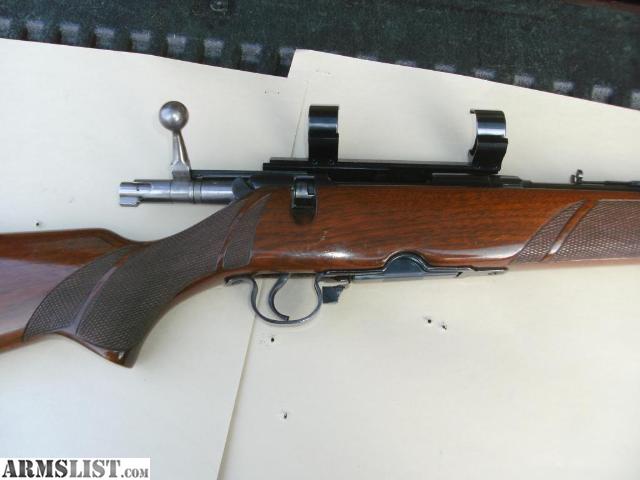
I finally took the weaver side-mounted scope off my 340 30-30, and the receiver said that it was a 340C (“C” for Compact). The only problem with that is that the 340C only came with an 18 ½ inch barrel, and my barrel is 20 inches long. What’s even more confusing is that the 340C was only made between 1962-1965 (before the act in 1968 saying that all guns needed serial numbers) BUT my 340C DOES have a serial number, meaning its manufacture date had to have been AFTER 1968. WHAT’S GOING ON! Also, the butt plate on the 340C should have a white line spacer, and mine does not. My theory is that at some point in my rifles history, someone used the stock and barrel from a 340, and put a 340C receiver on it.
Since both the 340 and 340C came in 30-30, it makes sense that it would work. Am I losing my mind, or am I close to solving this riddle? All the info I’ve found on this Savage came from “The Gun Digest Book of Modern Gun Values, 15th Edition,” so I consider this a reputable source. Thanks for any help TheHighRoad can provide. Even though SN's were not required prior to '68, very few did not have them. I don't know enough about the 340 to help with the rest of your questions.
But it may well have been made before 1968. Lots of guns came with white line spacers. I think they are UUUUgly and remove all of them.
Others feel the same so I'm not surprised by that. My gut feeling is that the gun is probably factory original except for the white spacer. Non-cataloged guns are not unusual.
It is also not unusual for the factory to put a few guns together from various parts laying around with no special designation. A 340C with a full length barrel could be a mystery. But presence of a serial does not make necessarily make it post-68. Most of the pre-1968 guns I have seen without serial numbers were low-end.22 rimfires and 12 ga single-shot shotguns, the 'farmer's barn gun' types treated as tools like axes, shovels, and hoes. I suspect the majority of centerfire rifles like 340 had serial numbers simply from the viewpoint of factory proofing and tracking quality control. Lack of a factory serial will mark a gun as pre-1968, but presence of a factory serial number does not date a gun, unless it is known to be one of the makes and models that did not have serial numbers pre-1968. But on topic: I think you are right to expect a 340 C to have a carbine length barrel Digging around, the Savage 340 was the basis of a family of guns for Savage and its subdivisions Stevens Arms and Springfield.
(Savage Models 340, B, C, D and V; Savage 340 Series E; Stevens 325, B, C and D and Springfield 840, and I have probably missed a few; my reference collection is modest). Wilson 'Price Guide to Gun Collecting' lists Savage 340 rifle Savage 340 C carbine so if it is marked 340 C it is reasonable that you would expect a carbine length barrel. Numrich Arms/Gun Parts Corp. (who have taken over spare parts for discontinued models) list only the.30-30 22' barrel as available as a replacement part. This implies the carbine length barrel was a limited production item, and if a 340C barrel was replaced, it is likely the only barrel available for replacement would be the rifle barrel, 22' in 30-30. On the other hand, if there were 340 C marked receivers left over at the end of a carbine production run, Savage might have been used up at the start of a production run of rifles. That was a common practice, to use up left over parts on similar models.
(Mauser commonly mixed and matched parts when restarting production runs of the C96 and it drives collectors nuts.) Look at it this way, you have a mystery gun, with a character of its own. There’s also the possibility that as my gun ages, it’s growing and getting tallerbut doesn’t it usually work the other way around? And I also agree with what lefteyedom said.
I’m going to have to beef up my security so that jerk who snuck in and added an 1 ½ to my rifle doesn’t get ahold of my 10/22 and turn it into a bull barrel. That would beawful Thank Mr. Brown for all the information. Your reference materials might be modest, but they overshadow mine considerably. I’m glad that there’s a little mystery to my rifle. It was already an odd-ball (being a single lug, krag-style 30-30 BOLT action), so why not throw in a few more twists and turns? It was interesting that the only replacement 30-30 barrel was 22 inches.
When I measured the barrel on mine, I went from the muzzle to where the barrel MET the receiver. Am I measuring it correctly? I finally took the weaver side-mounted scope off my 340 30-30, and the receiver said that it was a 340C (“C” for Compact). The only problem with that is that the 340C only came with an 18 ½ inch barrel, and my barrel is 20 inches long. What’s even more confusing is that the 340C was only made between 1962-1965 (before the act in 1968 saying that all guns needed serial numbers) BUT my 340C DOES have a serial number, meaning its manufacture date had to have been AFTER 1968. WHAT’S GOING ON!
Also, the butt plate on the 340C should have a white line spacer, and mine does not. Click to expand.You've made a couple of questionable assumptions and jumped to some shaky conclusions. If Gun Digest says that Savage 340Cs came with 18.5' barrels, that means that Savage's marketing department told Gun Digest that they planned to make 340Cs with 18.5' barrels that year. It doesn't mean that they ONLY made them with 18.5' barrels for the entire life of the gun.
The Book of Gun Values is a good reference, but it's not gospel. Similarly, while serial numbers weren't required before 1968 millions of guns came with them nevertheless. Most centerfire rifles had them, although it was fairly common for 22s and inexpensive shotguns to come without. So if you have a gun sold in the US that doesn't have a serial number it's a pretty good indication that is was made before 1968. The reverse isn't necessarily true.
I suspect that your 340 was made in the early 60s and came from the factory with the barrel it has on it now. Other scenarios are possible, but not likely. After taking tulsamal’s advice on how to get the ACTUAL length of my barrel, I found it to be 22 inches longnot the 20 I originally thought.
This makes what Carl Brown said (“This implies the carbine length barrel was a limited production item, and if a 340C barrel was replaced, it is likely the only barrel available for replacement would be the rifle barrel, 22' in 30-30”) make complete sense. Thanks for all the help! I got a chance to shoot it with my dad this weekend, and man oh man was it fun! IMPORTANT DISCLAIMER Although The High Road has attempted to provide accurate information on the forum, The High Road assumes no responsibility for the accuracy of the information. All information is provided 'as is' with all faults without warranty of any kind, either express or implied.
Neither The High Road nor any of its directors, members, managers, employees, agents, vendors, or suppliers will be liable for any direct, indirect, general, bodily injury, compensatory, special, punitive, consequential, or incidental damages including, without limitation, lost profits or revenues, costs of replacement goods, loss or damage to data arising out of the use or inability to use this forum or any services associated with this forum, or damages from the use of or reliance on the information present on this forum, even if you have been advised of the possibility of such damages.